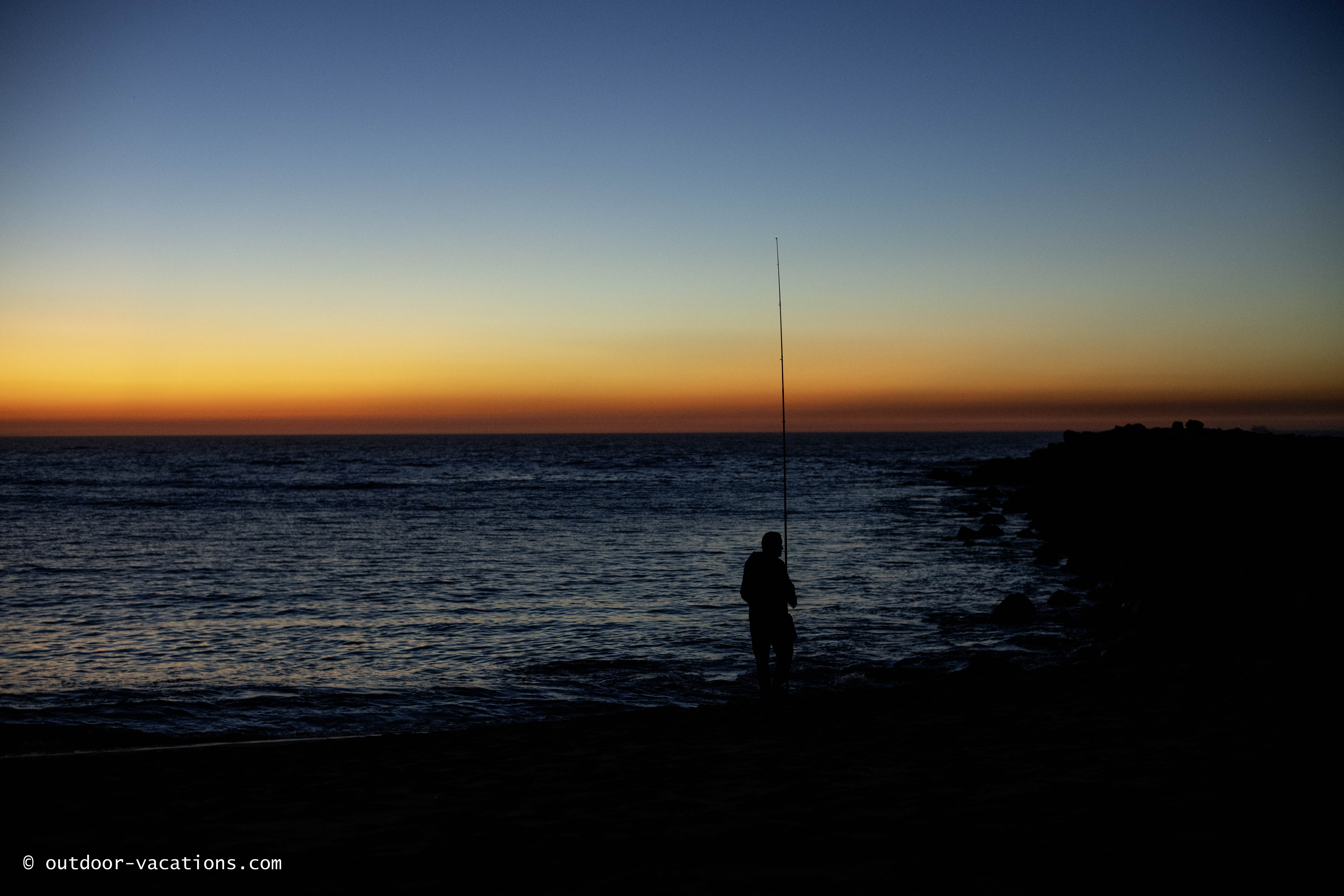
Reasons to Hike the Fishermen’s Trail in Portugal
✓ A Unique Hike! Unlike many inland hiking trails, the Fishermen’s Trail follows the wild coastline, often on sandy paths and cliff edges. It’s a physically engaging adventure with rewarding views.
✓ Engage with the Local Traditions The trail winds through traditional ancient fishermen’s communities with traditions that went passed down through generations.
✓ Tast fresh seafood, like percebes (gooseneck barnacles) and cataplanas, get to know artisanal products.
✓ Cultural discovery, explore the layered history of the Iberian Peninsula
✓ A trail of Freedom, the Fishermen’s Trail is not a crowded touristically hike. You can experience moments of pure solitude, where you can reconnect with yourself and appreciate some of the best sunsets you’ll ever see.
Itinerary of the Fishermen’s Trail in Portugal

52
KM
4
Nights
5
Days
Porto Covo – Zambujeira do Mar – Odeceixe – Aljezur – Arrifana – Carrapateira – Vila do Bispo – Sagres
Day 1: Arrival in Porto Covo (Optional circular hike)
Welcome to Porto Covo, a charming coastal village and the northern entry point to the Fishermen’s Trail.
You can relax here, breathe in the salty Atlantic air, and get into the rhythm of Portugal’s coast. Explore the old cobbled streets of the old village center and enjoy the relaxed, authentic atmosphere. Visit Praia dos Buizinhos or the sweeping Praia Grande for your first sunset by the ocean. The small fishing port (doca) is still in use, and you can still see fishermen repairing their nets or unloading their catch.
You can also go on a short circular hike with is a rewarding introduction to the Fishermen’s Trail. Ideal for stretching your legs before the longer hikes ahead, this hike near Porto Covo, follows the cliffs toward Sissal Beach, offering sweeping views of the Atlantic and the small island of Ilha do Pessegueiro.
The path crosses sandy dunes and rugged coastal terrain, mostly flat yet lively underfoot with shifting sands and uneven ground. Along the way, coastal vegetation begins to set the scene for the landscapes to come, while fishermen in small traditional boats remind you of the trail’s maritime roots and enduring connection to the sea.
In the evening, you can enjoy traditional Alentejo cuisine in one of the village restaurants: try fresh grilled fish, “açorda de marisco” (bread stew with seafood), or the “feijoada de búzios” (búzios bean stew). Take a rest and prepare for your adventure.
—
Accommodation: Porto Covo
Day 2: Zambujeira do Mar to Odeceixe
his day is all about dramatic views of rugged cliffs and serene beaches. You’ll pass the small harbour of Azenha do Mar, a perfect spot to enjoy freshly caught fish. Azenha do Mar reflects the deep-rooted fishing traditions of the region, with colourful boats and nets dotting the tiny harbour.
You’re about to enter one of the most beautiful beaches in Portugal. Odeceixe is known for its iconic crescent-shaped beach where the Seixe River meets the Atlantic, Odeceixe straddles the border between Alentejo and Algarve, blending the architectural styles and traditions of both regions. It’s the perfect spot to savor the local gastronomy, with dishes like feijoada, which combines agricultural and fish products, reflecting the strong relationship between these two activities.
If you have time, you can visit the Winery-Museum: This museum recreates a traditional winery, similar to those that existed in the area between the 1920s and 1940s.Also, the Odeceixe Windmill, that it’s located at the top of the village, the windmill offers insight into the artisanal process of milling cereals. From here, you can enjoy panoramic views.
—
Approximate walking profile
Difficulty level: Medium
Distance: 19 km / –mi
Highest point: 69 m.a.s.l. / — ft a.s.l.
Lowest point: Sea Level / — ft a.s.l.
Elevation Gain: 340m / –ft
Elevation Loss: 370m / –ft
—
Transportation: Porto Covo to Zambujeira
Meals: B
Accommodation: Rural Lodging / Guest House
Day 3: Aljezur to Arrifana
This stage leads you back to the coast, offering stretches of stunning beaches and dramatic cliffs.
Arrifana is a haven for surfers because the beach is sheltered by towering cliffs. Nearby are the ruins of the Ribat of Arrifana, a 12th-century fortress. The name “Arrifana” comes from the Arabic word for myrtle, a plant that grows in the area.
Don’t forget to try the local dishes such as octopus in olive oil, fish stew, fried moray eels, and octopus with sweet potatoes.
—
Approximate walking profile
Difficulty level: Medium
Distance: 17 km / –mi
Highest point: 112 m.a.s.l. / — ft a.s.l.
Lowest point: Sea Level / — ft a.s.l.
Elevation Gain: 360m / –ft
Elevation Loss: 310m / –ft
—
Transportation: Odeceixe to Aljezur
Meals: B
Accommodation: Rural Lodging / Guest House
Day 4: Carrapateira to Vila do Bispo
The trail goes inland, revealing the Algarve’s rural character and the landscape is a mix of rolling hills, farmland, and occasional glimpses of the ocean.
Vila do Bispo is the gateway to the Cabo de São Vicente. This is a place that reflects the Algarve’s deep connection to both: land and sea.
If you have the opportunity, visit the small church, Igreja Matriz, which features beautiful Baroque altarpieces. You can taste local dishes like xerém, a traditional cornmeal-based dish similar to porridge, often combined with other ingredients depending on the region.
—
Approximate walking profile
Difficulty level: Medium
Distance: 16 km / –mi
Highest point: 135 m.a.s.l. / — ft a.s.l.
Lowest point: Sea Level / — ft a.s.l.
Elevation Gain: 410m / –ft
Elevation Loss: 345m / –ft
—
Transportation:
Morning – Arrifana to Carrapateira
Evening – Vila do Bispo to Sagres
Meals: B
Accommodation: Rural Lodging / Guest House
Day 5: Sagres (Optional circular hike)
This day leads to Sagres and the Cabo de São Vicente, offering sweeping views of the Atlantic and a palpable sense of anticipation. The barren landscape gives way to the dramatic promontory of the cape, once thought to be the edge of the known world.
This iconic site o Cabo de São Vicente, has been a place of spiritual reverence since ancient times. In Roman times, it was called Promontorium Sacrum (“Sacred Promontory”). During the Age of Discoveries, it became a symbol of Portugal’s maritime ambitions and was closely linked to Prince Henry the Navigator.
Sagres is known for its maritime history, where it stands the Fortaleza de Sagres, a fortress associated with the explorations of the 15th century. In 1443, Prince Henry the Navigator requested his brother Pedro to grant him the Sagres region to establish a town. His testamentary letter of September 19, 1460, indicates that Sagres was intended as a place of assistance for navigators passing through, offering supplies or refuge.
The Farol de São Vicente (lighthouse) at the cape is one of Europe’s most powerful, guiding ships along this historic coastline.
Optional Hike:
Follow the Fishermen’s Trail from Sagres to Cabo de São Vicente and reach the southwestern tip of Europe, where the Atlantic meets towering cliffs in a spectacle of wind and waves.
The route traces a rugged coastline, rising gently above the sea with open views that stretch to the horizon. Narrow clifftop paths shift between firm dirt, gravel, and soft sand, shaped by the constant rhythm of wind and weather. Along the way, seabirds nest on the rocky edges, and fishermen stand poised on the cliffs, continuing age-old traditions in one of Portugal’s most powerful coastal landscapes.
—
Approximate walking profile of the optional hike
Difficulty level: Medium
Distance: 13 km / –mi
Highest point: 65 m.a.s.l. / — ft a.s.l.
Lowest point: Sea Level / — ft a.s.l.
Elevation Gain: 165m / –ft
Elevation Loss: 165m / –ft
—
Meals: B
Starting: Porto Covo
Finishing: Sagres